
Dear friends,
Most of us remember where we were and what we were doing 25 years ago today. I was getting ready for work, about to scoop up four-month-old Joseph Henry from the bed and turn off the TV when I heard the news bulletin – a plane had hit the World Trade Center.
I sat down, riveted by the pictures of what I first assumed was a tragic accident, when, unbelievably, another plane hit the second tower. Even watching it happen, it took a moment to sink in.
This was no accident. This was deliberate, an act of terrorism. I looked at the baby in my arms and wondered what kind of world he would grow up in.
That night, like many churches across the country, St. Timothy’s in Chattanooga, where I was then priest, held a special service in a sanctuary filled with shocked and grieving people.
Here is part of what I said that night:
* * *
Throughout this long and horrible day two images have replayed in my mind. They are both memories of experiences I had three summers ago, in 1998.
The first is standing on the 95th floor of the World Trade Center. I was there with a group of Episcopal priests from around the country, participating in a leadership conference. We were visiting the offices of the senior warden of Trinity Church on Wall Street, who was the president of the firm that occupied this imposing real estate.
The office was as plush as you would expect – equipped with a telescope to view the boats and the Statue of Liberty in the harbor below, and filled with expensive art and furniture. Gloved men in white jackets served us wine and appetizers.
What must it be like to have this kind of power and wealth, to live this kind of life? I wondered as I gazed at my surroundings.
Today I pray for the people who worked in that office – both those with great power and wealth and those who served them.
The second image is from later that summer. I was with our youth on a pilgrimage to New Mexico. On the way we stopped in Oklahoma City to pay tribute at the site of the Murrah Federal Building, at that time the scene of the most horrific act of terrorism in the nation’s history.
Next to the gaping hole in the earth where the Murrah Building once stood is a Catholic church, which has turned its grounds into a memorial to those who died in the bombing.
Standing tall in that garden, his back turned to the ravished earth, his shoulders hunched over in grief, is a statue of Jesus. Tears run down his cheeks.
Inscribed at the base of the statue is the shortest, but perhaps most poignant verse in scripture – “Jesus wept.”
This night, as Jesus looks over the cities of New York and Washington, and over the field in Pennsylvania where a fourth hijacked plane crashed, over the homes around the world of the people who died in those planes and the buildings that they hit, Jesus weeps once more.
He weeps for those who died or were injured, and for those who mourn and love them.
He weeps for the hatred that pollutes the hearts of God’s people – hatred that leads to such horrific acts and hatred that fuels the calls for vengeance.
He weeps for the panic and fear that grip not only this nation, but so much of the world.
He weeps because he knows that this is not the first time, nor will it be the last, that God’s people have caused such harm to one another.
* * *
That was 25 years ago, a time when we all grieved over what had been done to our country from those outside its borders.
But even in the midst of the shock and grief, I had hope that this horrific event would somehow pull us together as a nation, that we would listen to our better angels.
I had hope that we would not act out of fear and a desire for vengeance, that we would pay honor to those who had died by seeking justice, yes, but also by working for peace and understanding between people of different cultures and beliefs.
On this 25th anniversary of that awful day those hopes seem very naive. Far from being brought together, our nation is more polarized now than anytime since the Civil War.
And sometimes when I look at my now 25-year-old son, I still worry about what kind of country he will spend his life in. But my concerns now are more about the internal state of our nation that concerns about external foes.
A quarter century after that dark day, the voices of our better angels have too often been drowned out by voices of fear and hate.
We’ve seen increasing racial tensions, and increasing anti-Semitism and anti-Muslim rhetoric.
We’ve seen immigrants snatched off the streets, and imprisoned in buildings with subhuman conditions.
We’ve twice elected an immoral and dangerous man as president, who is intent on dismantling the Constitution and all it stands for as he and his sycophants strive for more and more authoritarian power.
Hate speech has been brought into the main stream, often by that same immoral president.
We have retreated into our own camps, suspicious and fearful of anyone who may be different, who is not like us.
Against that backdrop we hear Jesus counter that way of thinking with a picture of a God who is loving and inclusive.
Jesus himself was the target of criticism for daring to go outside the acceptable circle, to reach out to the outcast, and challenging the empire of his day.
Again and again Jesus tells us of a God who calls us, demands us, to lay aside our fears and prejudices and reach out to those on the margins, those who are different, those who are feared and hated.
I realize that not all who call themselves Christian agree with that image of God. Several years ago I wrote a column that was published in Episcopal Life Online about the fear of the other. In that essay I said that the God I worship calls us to a different way of life. I received many positive responses to the column, but not all were complimentary.
One in particular was not impressed by the God I described, a God of compassion and hospitality, and grace.
“Frankly,” he wrote, “my God can actually, you know … do stuff. Your deity is a weak, impotent, little wuss who can’t seem to do much of anything without human help. Why anyone would ever be attracted to your pathetic excuse for a deity completely escapes me.”
On this 25th anniversary of September 11, I call us to think about which God we worship, and who we are as people of faith.
There are plenty of examples in scripture of the warrior God, the God of anger and vengeance and bloodlust.
But I believe that the full and complete and final image of God is better than that, more than that, and so are we.
I believe there is true strength in compassion and hospitality. There is toughness in love and grace and forgiveness.
And there is nothing wussy or impotent or pathetic about it.
With love,
Tricia
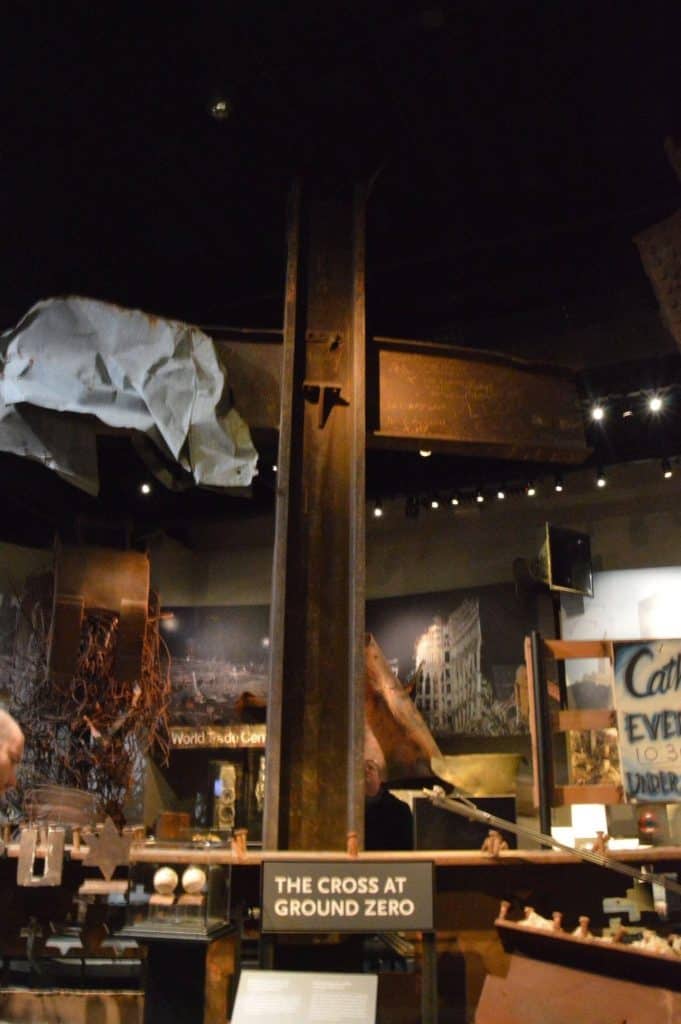
“It is the greatness and heart of the Christian message that God, as manifest in the Christ on the cross, totally participates in the dying of a child, in the condemnation of a criminal, in the disintegration of a mind, in starvation and famine, and even in the human rejection of Himself. There is no human condition into which the divine presence does not penetrate. This is what the Cross, the most extreme of all human conditions, tells us.” — Paul Tillich